LATEST: NSW State of Affairs 2026
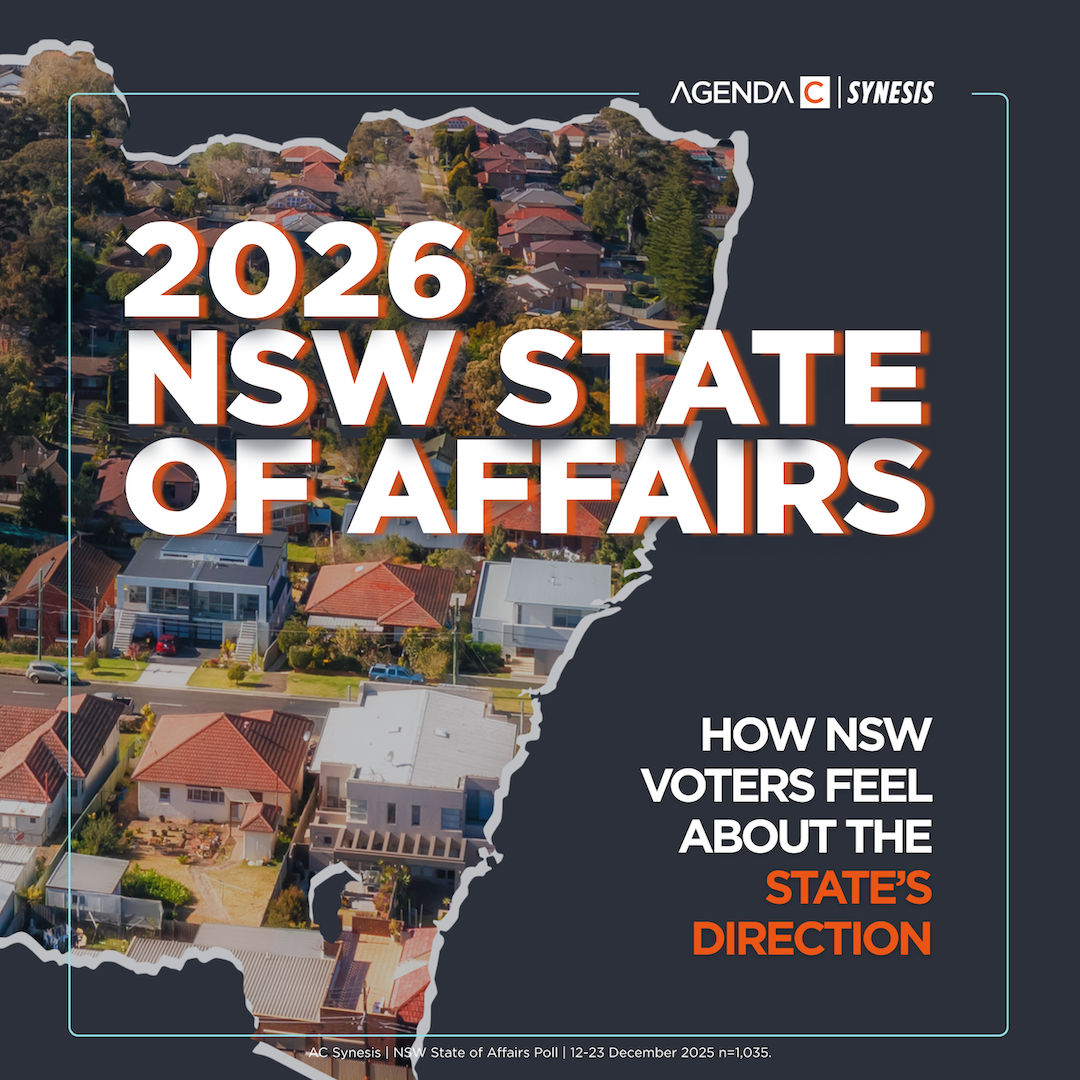
Australia’s Largest and Most Influential State Economy
Agenda C | Synesis commissioned independent polling to understand what is shaping the NSW economy, community confidence, and voter expectations as the state moves toward 2026. We do this to replace assumptions with evidence, and to help decision-makers see the pressures and priorities that are driving behaviour in real time.
What we publish
We share selected public insights to fuel informed debate, including voter sentiment on cost-of-living relief, housing affordability, energy priorities (balancing price, reliability, and emissions), productivity drivers, and emerging generational shifts. These findings highlight clear signals on what resonates and what risks eroding trust. Detailed electoral metrics, leader preferences, and party vote modelling remain reserved for confidential client briefings and commissioned work.
NSW State of Affairs Methodology
- The sample size was n=1,035, a robust, comprehensive exploration of NSW voters.
- The survey was conducted between 12th – 23rd of December 2025.
- Respondents were recruited via an accredited online research access panel. Results were weighted to be representative of the NSW population by age, gender and location, in line with the 2021 ABS Census.
- A detailed exploration of how cost of living concerns, energy affordability and productivity are reshaping NSW.
- The margin of error is approximately +/- 3.1%.
Respondents were recruited via an accredited online research access panel. Results were weighted to be representative of the NSW population by age, gender and location, in line with the 2021 ABS Census.
In the news
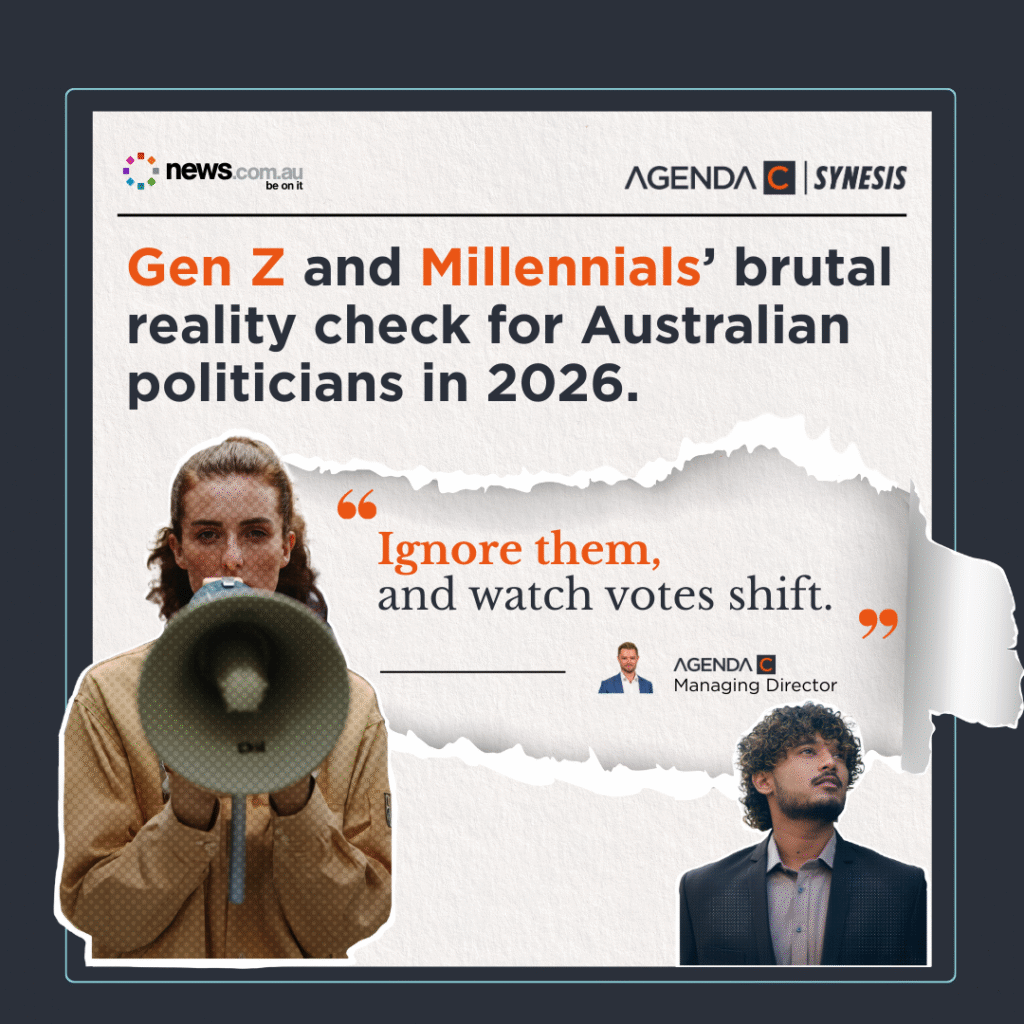
The AC Synesis Poll, with our exclusive polling first published in news.com.au reveals NSW is currently in a state of pressure from cost of living and energy bills. The poll revealed a striking generational gap in Australia, with younger people markedly more pessimistic and worried about their prospects than older cohorts.
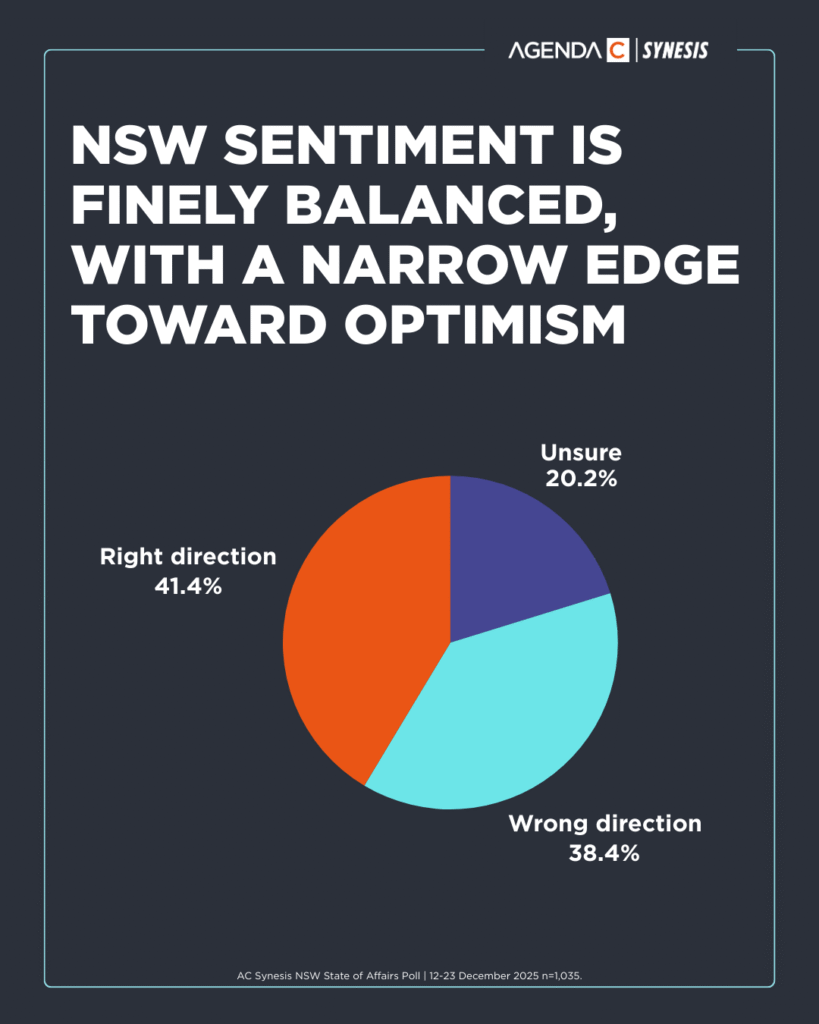
NSW is finely balanced and still persuadable, with “right direction” only narrowly ahead of “wrong direction” and a large undecided cohort keeping sentiment fluid.
Cost of living dominates NSW politics, and voters define it through weekly essentials: groceries, energy bills, and housing costs.
Voters want action but resist households footing the bill, preferring federal funding, reprioritisation and private partnerships over higher taxes, new charges or more debt.
On energy, two thirds of voters want government to prioritise lowering prices for households and businesses over accelerating the transition to net zero, while still backing expert‑led, pragmatic policy that balances affordability, reliability and emissions.
For NSW voters, productivity is not abstract: the top levers are affordable energy and more efficient government services, not theory‑heavy reform agendas.
Gen Z vs Millennials: two generations, two states of mind
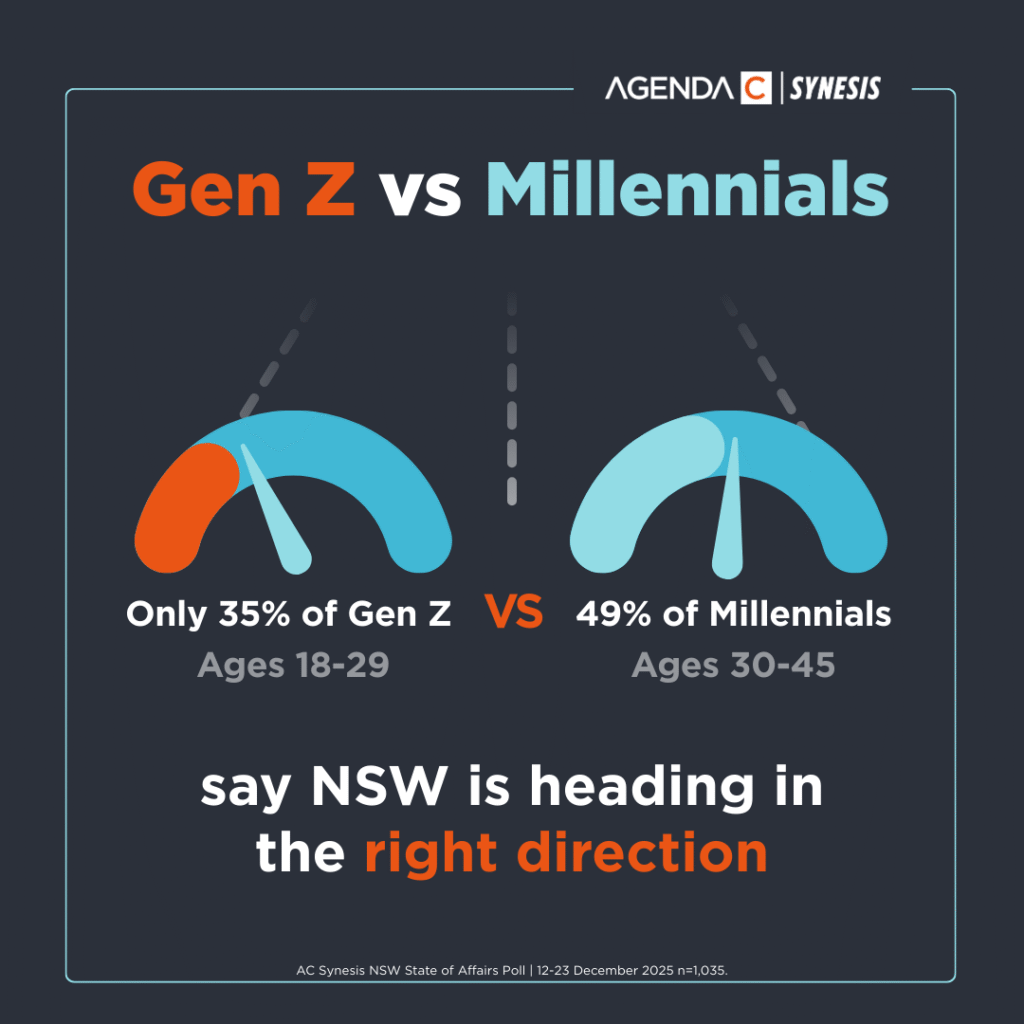
Agenda C Synesis research shows a clear generational divide in how younger NSW voters view the state’s direction. Only 35% of Gen Z say NSW is heading in the right direction, compared with 49% of Millennials, highlighting a growing gap between emerging voters and those entering family and career stability.
Gen Z are more doubtful and more undecided, reflecting a cohort under acute pressure from rent, job security and rising everyday costs. They are not disengaged, but unconvinced, and require proof of delivery rather than promises.
Millennials, by contrast, are more optimistic but pragmatic. Their support is anchored in stability, with strong expectations around housing affordability, childcare, flexible work and cost-of-living relief.
Together, these generations represent the most influential and persuadable voting blocs heading into 2026, but they respond to different pressures and require distinct messages to earn trust.
Families: why parenthood feels out of reach
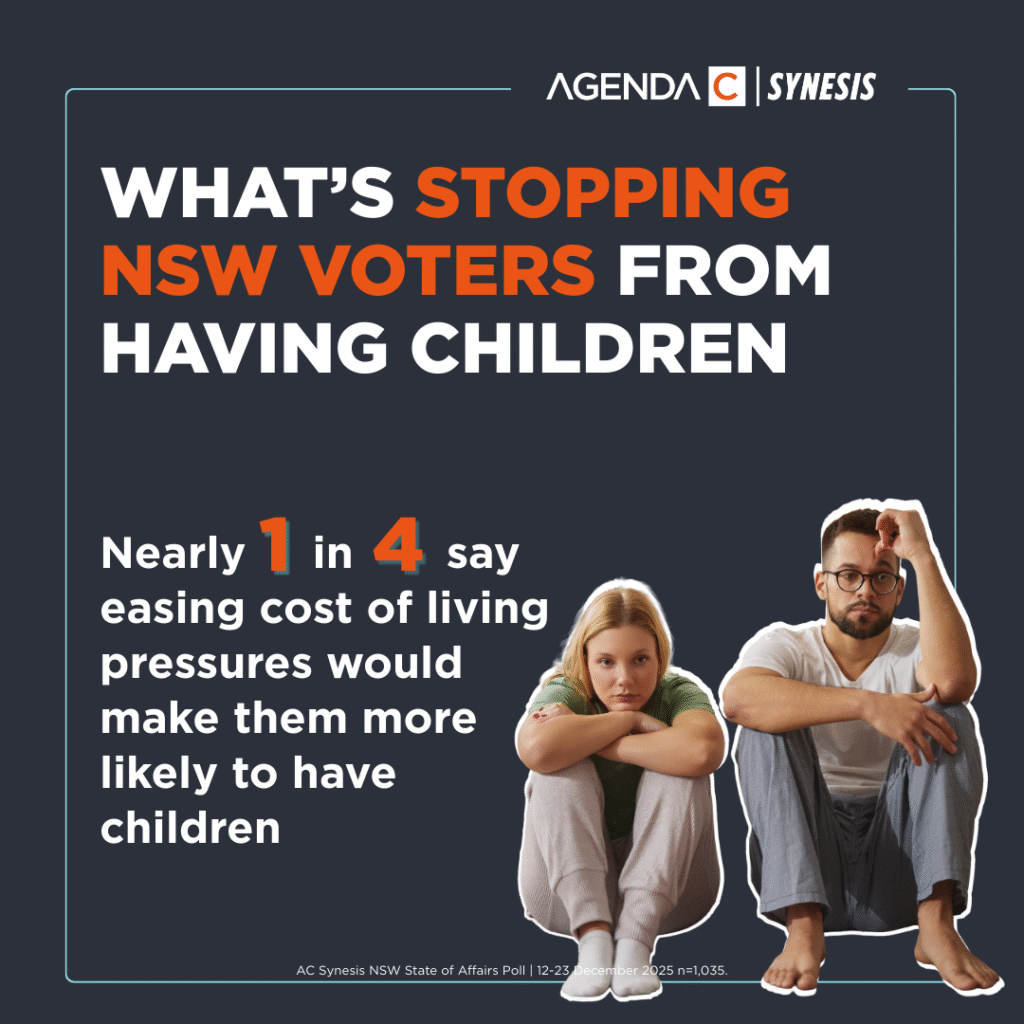
Agenda C Synesis research shows that decisions about having children in NSW are being delayed less by values and more by economics. Nearly one in four voters say easing cost-of-living pressures would make them more likely to have children, pointing to a generation weighing family life against financial risk.
Housing costs, groceries, energy bills and childcare are stacking simultaneously, making parenthood feel conditional rather than aspirational. For many families, confidence in the future depends on whether everyday costs stabilise enough to make long-term planning feel safe again.
The insight is clear: family formation has become an economic decision before it is a personal one.
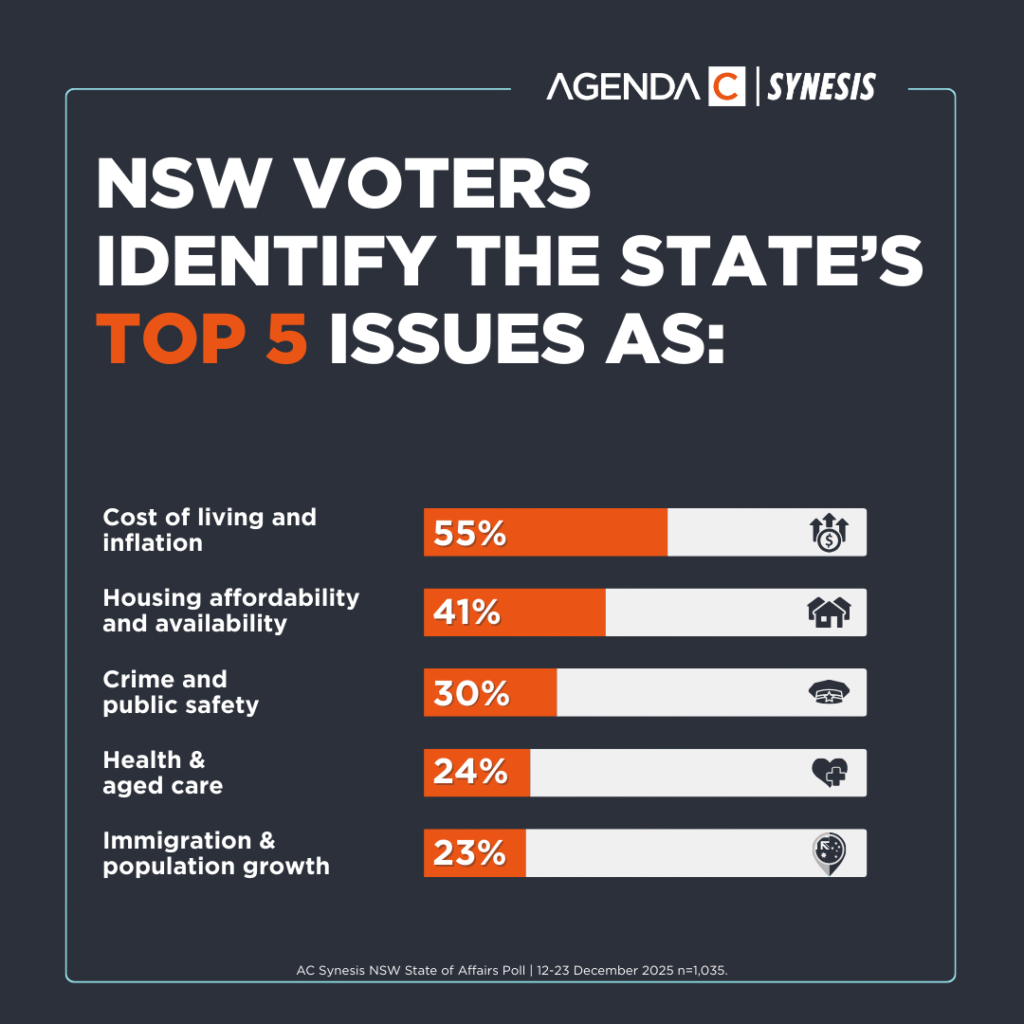
NSW voters’ top issues: the pressure stack
Agenda C Synesis research shows NSW voters are prioritising easing immediate household pressures over longer-term or systemic concerns. Cost of living dominates the agenda, well ahead of housing affordability, crime, health and immigration, reinforcing that political judgement is being shaped by everyday financial strain.
What matters is not just the ranking, but the gap. Cost of living sits in a tier of its own, acting as the lens through which all other issues are assessed. Housing follows as the second pressure point, while crime and health form a middle tier of concern.
This hierarchy explains why voters are sceptical of policies that do not connect directly to weekly expenses. Relief and visible delivery on core household costs are now the entry price for trust.